Introduction
This blog post follows on from an earlier piece where I reflected on how behavioural insights and design thinking could become part of the methodology used by the innovation team I joined in February. As noted then, this is part of a series intended to spark discussion about what innovation approaches might be effective in our work. Here, I focus on the potential use of systems thinking as part of our innovation toolkit and reflect on how we have already begun applying systems thinking within our work.
The key focus areas of the SYMCA innovation team are:
- Improving early years literacy outcomes
- Exploring innovations in bus networks
- Embedding a culture of innovation across South Yorkshire
Achieving impact in these areas requires collaboration, so partnership working is at the heart of our innovation approach.
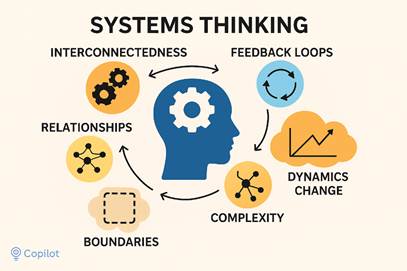
Figure 1 Adapted from the blog
Understanding Systems Thinking by David Sharply 2025
What Is Systems Thinking?
Before considering how systems thinking might be relevant to our work, it is helpful to briefly define it. While there is no single agreed definition, systems thinking is generally understood to be:
- Holistic
- Focused on relationships
- Grounded in complexity
- A way of thinking about problems, not just a collection of tools
According to the Association for Project Management, systems thinking is an approach to problem‑solving which takes into account the overall system as well as its individual parts. One of my favourite definitions describes it as thinking in systems, not just about systems.
Russell Ackoff, a renowned systems thinker, famously used the metaphor of designing a motor car: if each component is designed in isolation and then assembled, the result is unlikely to be a functional — let alone good — car. This illustrates why systems thinking matters.

Figure 2 An AI generated image to indicate Ackoff’s car design metaphor
I also recognise that there are different forms of systems thinking, sometimes emerging from very different philosophical traditions. Here, however, I am focused on how systems thinking can be applied rather than debating its theoretical variations.
Systems Thinking as an Innovation Tool
Systems thinking is relevant to innovation because it encourages organisations to look beyond isolated problems toward the interdependencies that shape outcomes.
Ackoff emphasised that contemporary challenges rarely result from a single cause; they emerge from the behaviour of whole systems. His concept of mess management suggests that innovation is most effective when it addresses systemic interactions rather than optimising components in isolation. This perspective encourages teams to move from incremental improvement toward idealised design — imagining the best possible version of a system and then working backwards to create it.
Peter Checkland similarly argued that challenges are often “ill‑defined, complex, and subject to multiple interpretations.” By making different worldviews explicit and iteratively modelling systems from these perspectives, his approach helps innovation teams navigate ambiguity and build shared understanding. This links directly to earlier ideas about collaboration and community engagement.
Mike Jackson also advocates participatory methods within systems thinking to address power dynamics within systems. From an innovation perspective, this implies that existing power structures and interests may need to be challenged to enable meaningful change.
Taken together, these ideas suggest that applying systems thinking to innovation can help organisations think holistically, act collaboratively and design with intention. This reinforces arguments made by Geoff Mulgan (Big Mind) and Tim Brown (Change by Design), who contend that innovation increasingly requires joined‑up, human‑centred systems thinking.
Our Emerging Use of Systems Thinking
So far, we have begun applying systems thinking in two main ways:
- Shaping our understanding of the problems we are exploring, by paying attention to complexity, interconnectedness and relationships.
- Experimenting with systems thinking methods, such as using rich pictures in a problem‑framing workshop.
Early Years Challenge
When applying systems thinking to the early years literacy challenge, we recognise that focusing only on parents’ experiences is insufficient. We also need to consider the challenges faced by service providers and how those challenges shape families’ experiences.
Tools such as causal loop diagrams may help us map these interconnections and identify potential unintended consequences — a core concern in Ackoff’s mess management. Complex issues like declining literacy rarely arise from single causes; they emerge from system behaviours. Once further research is completed, we plan to explore these interdependencies in more depth.
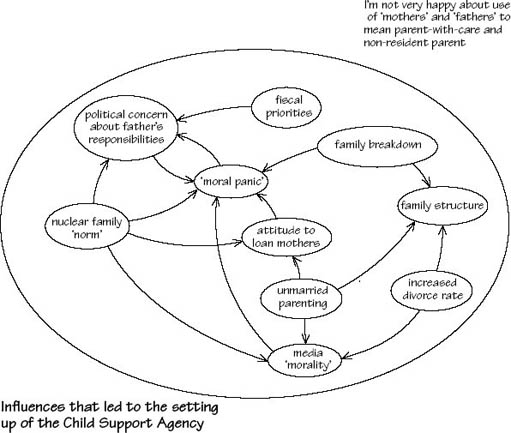
Figure 3 An example of an influence diagram, from source
Workshops and Rich Pictures
In a recent workshop, we used rich pictures to prompt different types of conversations. Asking participants to visualise how they perceived the problems helped nudge discussions toward interconnections and relationships. The resulting images were deliberately messy — the purpose was to stimulate fresh thinking rather than produce polished communication tools.
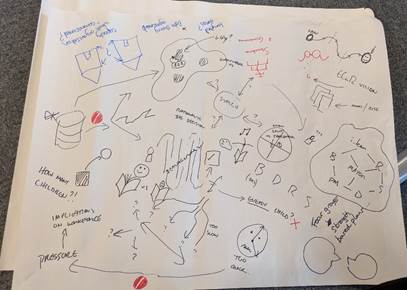
Figure 4 A rich picture example from a workshop I facilitated
Systems Thinking and Design Thinking
As outlined in my first innovation blog post, and in guidance from NESTA and the Behavioural Insights Team, applying systems thinking requires us to connect it with design thinking and methods set out in The Public Path to Innovation.
In another earlier blog I outlined in some depth connections between design thinking and systems thinking. My core argument was that when applying design thinking to address complex messy problems (such as the ones we are engaged with in our innovation team) it is necessary to combine it with systems thinking. This is needed to avoid the unintended consequences of solutions, something that risks happening if we engaged with these challenges by design thinking alone.
Conclusion
We recognise that systems thinking is a valuable approach for addressing the complex challenges we face in the SYMCA innovation team. We have begun to incorporate systems thinking into our methodology, but we are still at an early stage.
If you have thoughts on how we might integrate systems thinking into our innovation approach, we would love to hear from you.
 Digital Tim